Figures with a gentle energy
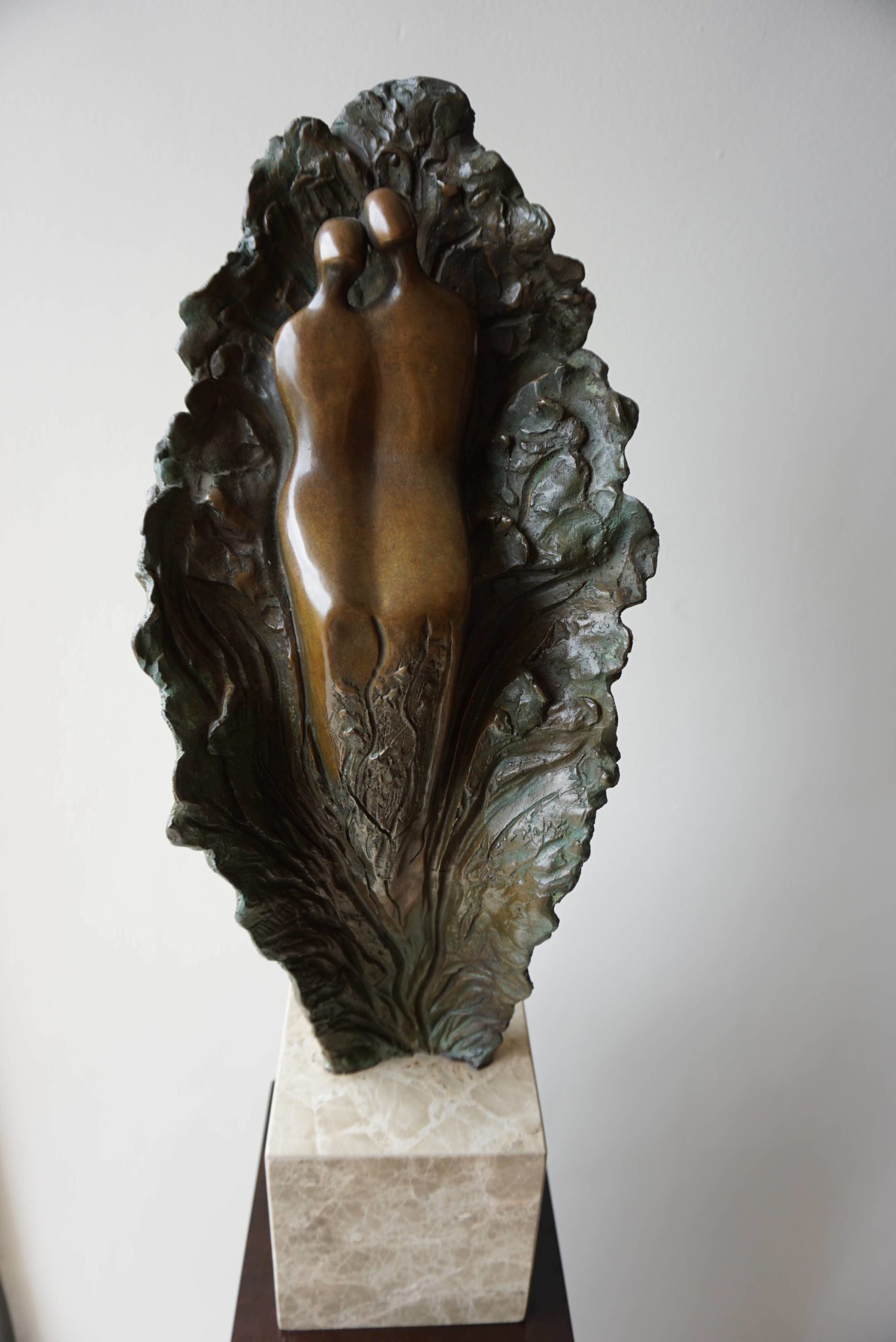
Panamanian sculptor, Maria Isabel Pino, exemplifies the virtuosity of the sculptural language in her pursuit of a well-executed and serene figurative style.
Her works display a clear classicism, a certain nod to the past—or perhaps, better yet, to a delicate timelessness—as if alluding to what is, in reality, eternal and beyond interpretation. Or perhaps it is a matter of impeccable naturalism due to the gentle energy with which she impregnates her forms.
The fact is that Pino takes as her starting point her delicacy, her contained emotion, her sense of space or the meaning that the human figure takes on within it, her romanticism or poetic sensibility that invades nothing but permeates everything. Her pieces also seem to be imbued with an unusual silence, a kind of exercise in concentration that envelops each piece in its own, unique intimacy.
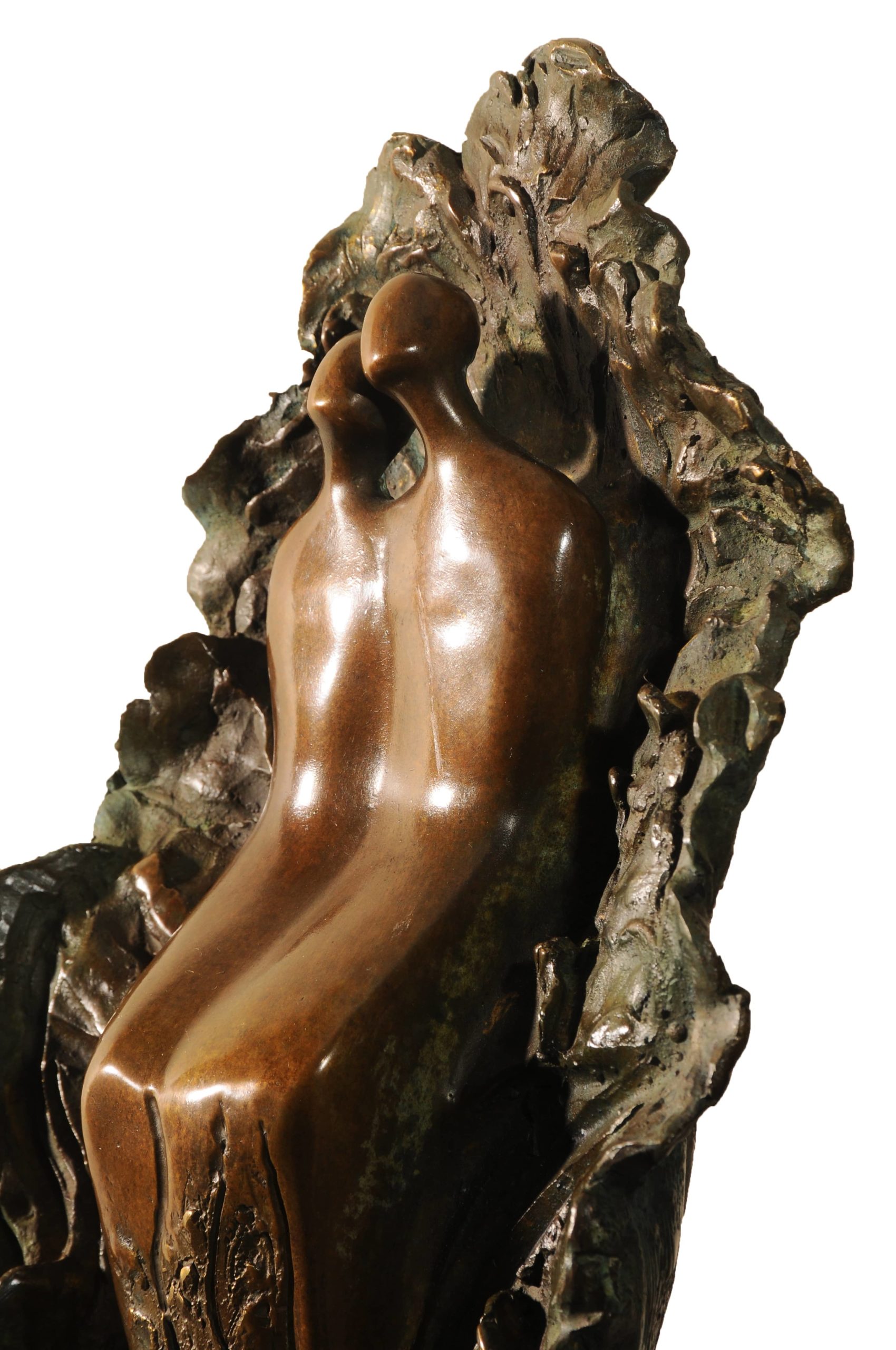
Her work is clearly emotive, with a curious cadence and a profound serenity. And there is perhaps a curious and beautiful effect in her works: it is as if the figure was being born or taking shape practically at the very moment the viewer contemplates it.
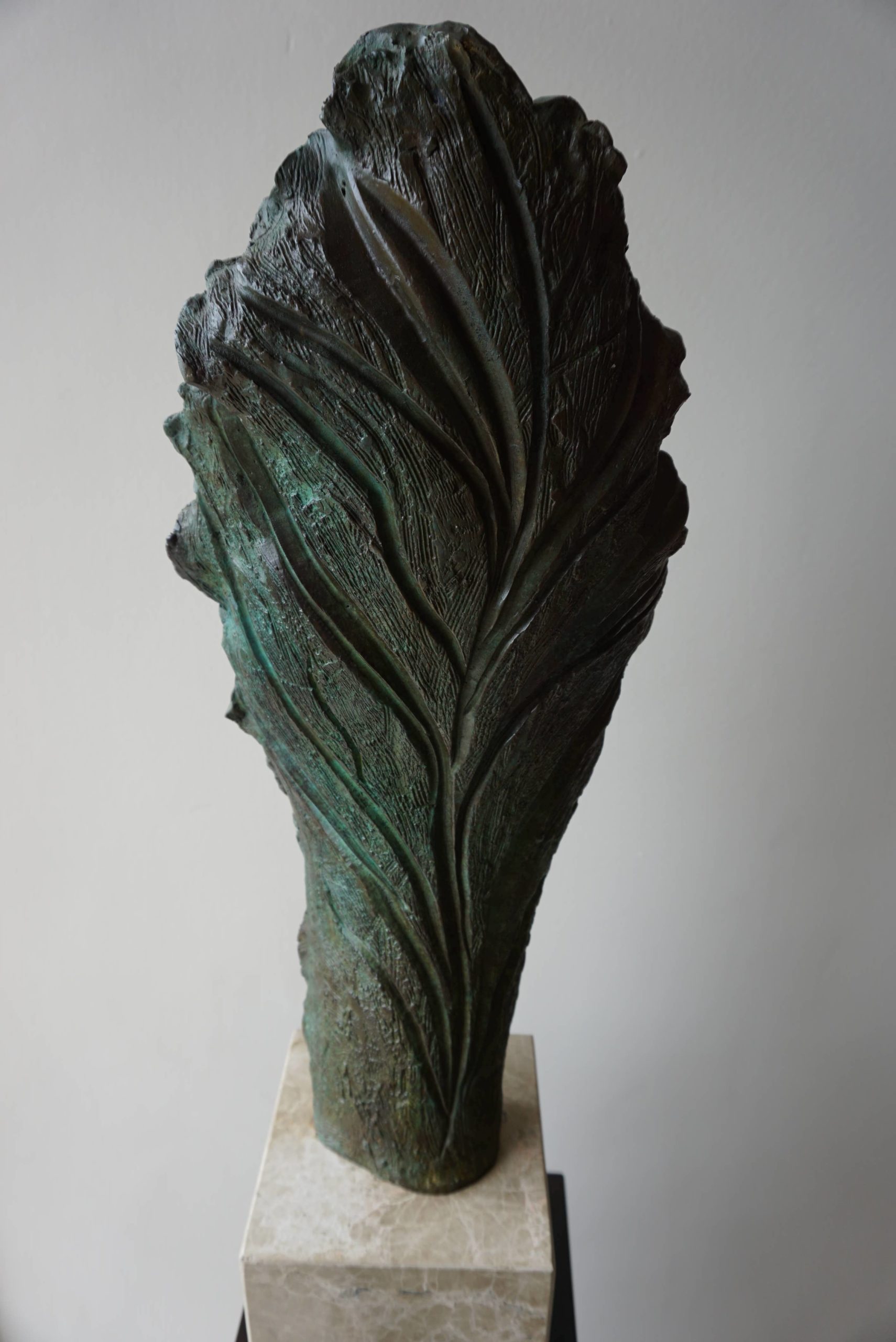
The narrative unfolding in her works seems to invite a subtle discovery—precisely through the gaze—of the power of the figure, of its slow movement, of its relationship with others and with nature, whether because it is emerging from nature or because nature envelops it as the artist portrays and shapes it. In her case, her sculptures retain both that effect of living nature and that of naturalness itself.
The work of a sculptor with a unique creative vision endowed with personal strength and, one might even say, bearing a delicate and simple message, achieving a special effect of life and movement.
Margarita Iglesias
Journalist and art critic
Transcended Reality
The virtual elimination of any ornamental elements and the rhythmic interplay of the solid, opaque forms with which she constructs her impure, fissured volumes define works in which she portrays human beings with bursts of deeply human tenderness.
In her most recent works—which can be seen in group exhibitions such as the First International Meeting of Visual Artists recently hosted by the Santana Gallery in Madrid, or the 2017 event at the Ateneo that brought together Latin American and Spanish artists—she eloquently highlights her desire to reduce the geometric structure to its role as a support until it almost disappears, her lack of devotion to the descriptive and to fidelity to the model, and her disdain for positive science and tradition.
With these convictions, she subverts that language while, through psychological and social recurring themes, she ensures that the idea, the unpredictable, the discovery, and the instantaneous take on absolute primacy.
Maria Isabel Pino seems to look simultaneously at what is within the reach of contemplation and what lies hidden. She blends the transcendent and the trivial and disregards appearance until she makes her statuary a created reality that nevertheless retains vestiges of what we see with our eyes—simplified and heterogeneous, synthesized and of raw carnality when it is not a lyrical combination of pleasures, inhabited by dreamlike, agonizing beings of anonymous identity, stripped of organic and functional components, of clothing, yet acting as if they possessed musculature, a brain, and a certain existence— alien to statistics, social values, and commitment to others—and who, following the course of the evolution of species, are still in a period of transformation.
With these—let us say intellectual—components, Maria Isabel Pino transforms virtuosity into a tool that both fascinates and stimulates thought and, rejecting the commemorative and the monumental, exalts the seemingly inconsequential that transcends us.
Antonio Leyva
From the Spanish and International Associations of Art Critics